
Your first prenatal visit can feel exciting, emotional, and a little overwhelming. One moment, you may feel ready to ask every question. The next moment, your mind may go blank in the exam room. That is normal. Pregnancy brings a lot of new information at once.
This guide gives you a gentle way to prepare. It does not replace medical advice. Your doctor, midwife, or qualified health provider should guide your care. Think of this checklist as a calm planning tool. It can help you feel more organized before your appointment.
The first prenatal visit matters because it starts your care plan. Your provider may review your health history, confirm dating, discuss symptoms, check blood pressure, order tests, and answer early questions. You may also talk about vitamins, food safety, movement, medications, and warning signs.
In 2026, early prenatal care has become an important topic. The CDC reported that first-trimester prenatal care declined in recent national data. That trend reminds expecting moms to schedule care early when possible. If access feels hard, even one phone call can help you find the next step.
Why the First Prenatal Visit Matters in 2026
Your first appointment does more than confirm pregnancy. It helps your care team understand your body, your health history, and your needs. It also gives you a safe place to ask questions without guessing online.
Many expecting moms search symptoms late at night. That can quickly lead to stress. A provider can help you separate normal changes from concerns that need attention. This support can bring real peace during the early weeks.
Early care can also help your provider notice risks sooner. These may include blood pressure concerns, diabetes risks, thyroid issues, anemia, medication questions, or previous pregnancy complications. You do not need to know everything before you arrive. You just need to show up with honest information.
What Usually Happens at the First Appointment

Every clinic works a little differently. Still, many first visits include the same basic steps. Your provider may ask about your last period, cycle length, symptoms, past pregnancies, health conditions, surgeries, family history, allergies, and current medications.
You may also discuss prenatal vitamins, especially folic acid. Your provider may order blood work or urine testing. Some visits include an ultrasound, while others schedule it for another day. Ask your clinic what to expect so you can plan your time.
Your provider may also talk about lifestyle habits. This can include sleep, food, hydration, caffeine, work, stress, exercise, travel, and safety at home. Be honest. The goal is not perfection. The goal is better support.
Book Early When Possible
Try to call a provider after you get a positive pregnancy test. Some offices fill quickly. Early booking gives you more options and less stress. If you do not have an OB-GYN or midwife yet, ask your insurance, local clinic, or trusted health center for options.
If the first available visit feels far away, ask what you should do while waiting. You can ask about vitamins, medications, urgent symptoms, and appointment timing. A short phone message can still give useful direction.
Write Questions Before You Go
Pregnancy questions can disappear the moment you sit in the appointment room. Write them down before you go. Use your phone notes, a small notebook, or a pregnancy app. Keep the list simple and clear.
You may ask about nausea, cramps, spotting, sleep, safe foods, work limits, travel, exercise, prenatal vitamins, medications, or emotional changes. No question is silly. If it matters to your peace, it belongs on your list.
How to Prepare Without Feeling Overwhelmed
Preparing for your first prenatal visit does not need to become a full project. You do not need a perfect binder, color-coded tabs, or a long list of medical terms. A simple plan works better.
Start with the basics. Save your appointment date, time, location, parking details, and office phone number. Check what documents the clinic wants. Ask if your partner or support person can join. Confirm whether you need to arrive early for forms.
If you already use a pregnancy app, use it as a soft planning tool. Save your symptoms, questions, and appointment reminders there. If apps make you anxious, keep it simple. Our post on pregnancy apps in 2026 shares a calmer way to track your journey.
Bring Records, Medications, and Honest Notes
Bring your ID, insurance card, and any clinic forms. If you have medical records from another provider, bring those too. You should also list your medications, supplements, allergies, and past health conditions.
Do not forget over-the-counter items. Include pain relievers, allergy medicine, vitamins, herbs, or sleep aids. Your provider needs the full picture. This helps them guide you safely.
Also write down symptoms. Note nausea, fatigue, bleeding, cramps, headaches, dizziness, mood changes, or sleep problems. You do not need to diagnose yourself. You only need to describe what you feel.
A Gentle Checklist for Appointment Day
Appointment day can feel easier when you prepare the night before. Choose comfortable clothes. Pack water and a small snack if your clinic allows it. Bring a sweater, because medical offices can feel cold. Wear shoes that make walking easy.
Give yourself extra time. Rushing can make you feel tense before the visit even starts. If traffic, parking, or check-in takes longer than expected, extra time can protect your mood.
If you feel nervous, name it. Many expecting moms feel that way before the first visit. You are not doing anything wrong. You are entering a new season, and new seasons can feel big.
What to Ask During Your First Prenatal Visit
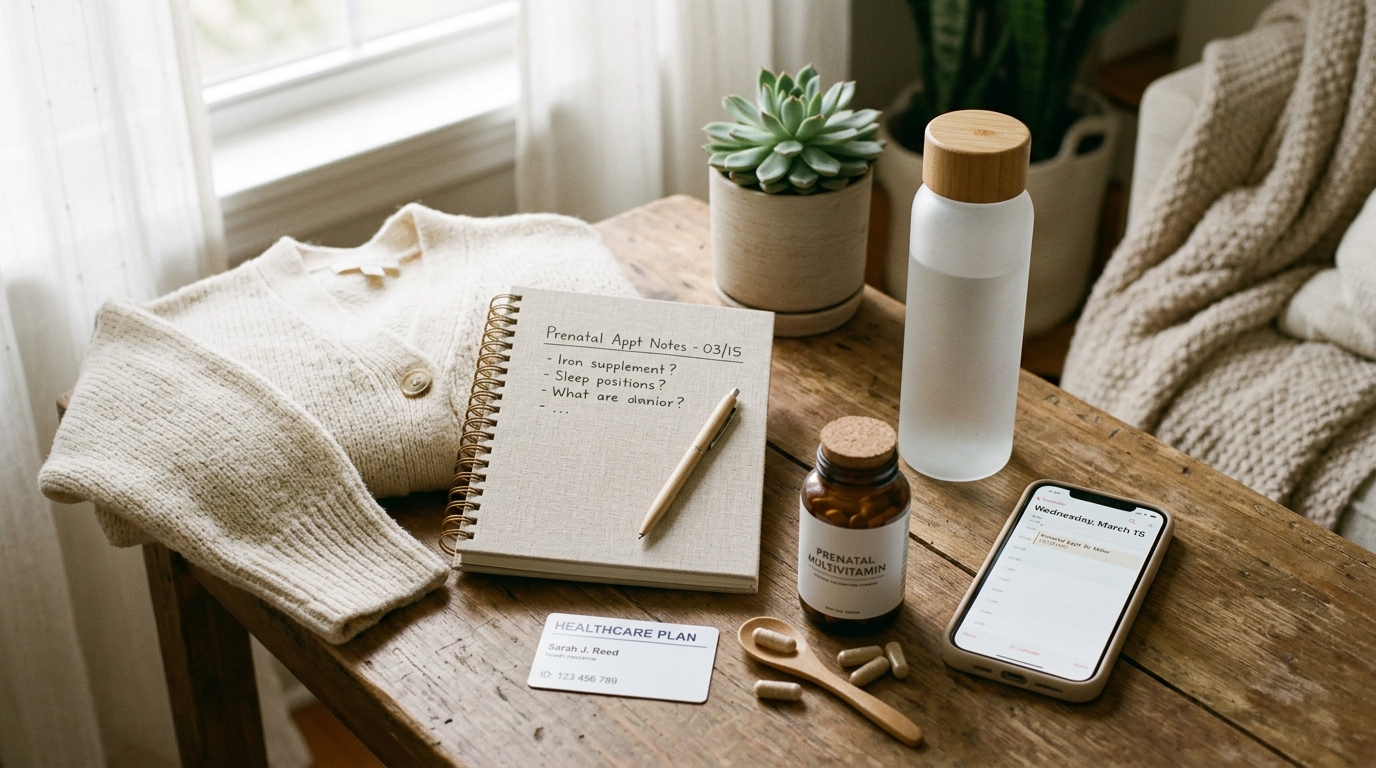
Your questions should match your real life. Ask what symptoms need urgent care. Ask how to contact the office after hours. Ask which medications you should avoid. Ask what foods, drinks, or activities need changes.
You can also ask about appointment schedules. Some providers follow traditional visit timing. Others use fewer but more focused visits for low-risk pregnancies. Ask what your provider recommends for you.
If you work long hours, travel often, or care for other children, mention it. Your care plan should fit your life as much as possible. Good care includes practical details, not just medical facts.
You may also want to ask about sleep and comfort. Pregnancy can change rest early. If bedtime already feels harder, read our guide on pregnancy sleep comfort in 2026 for gentle routine ideas.
Make Care Feel Easier After the Visit
After your appointment, take ten quiet minutes to review what happened. Save your next appointment date. Add test dates or follow-up steps to your calendar. Write down anything you want to ask next time.
You can also create a small pregnancy folder. Keep lab slips, ultrasound notes, insurance papers, and provider instructions in one place. A digital folder works too. Use whatever feels easiest.
If your provider gave you lifestyle tips, choose one small step to start. Maybe you set a vitamin reminder. Maybe you prepare easy snacks. Maybe you adjust bedtime. Small habits can support your peace without making pregnancy feel like homework.
As pregnancy continues, your needs will change. Clothes may feel tighter. Sleep may shift. Emotions may rise. You can explore our post on building a small maternity wardrobe when comfort becomes a daily need.
You can also think ahead to support after birth. It may feel early, but gentle planning can help. Our fourth trimester plan can help you prepare for rest, meals, visitors, and emotional support later.
For trusted medical information, you can review the CDC’s page on changes in timing of prenatal care initiation. You can also ask your own provider what the current guidance means for your pregnancy.
Final thought: Your first prenatal visit does not need to feel perfect. It only needs to help you start care, ask questions, and feel more supported. Bring your notes. Tell the truth about your symptoms. Ask for help when you need it. Pregnancy can feel uncertain, but you do not have to move through it alone.